Exterior scenes were filmed in Berlin’s Grunewald in August 1928, with studio work at Ufa’s Neubabelsberg facilities. The film passed censorship on 3 October 1928 under certificate B.20282 (2,250 metres in eight acts, not permitted for minors) and premiered on 16 November at Berlin’s Ufa-Theater Universum.
A surviving 35mm print of the film is held in the Bundesarchiv. It measures 2,213 metres with English intertitles. According to the film information sheet, only this English-language export version is known to survive.
The film opens with a small dog jumping into its mistress’s warm bed. She accidentally presses a button that folds the bed upwards, trapping them both and requiring an unexpected rescue. It is a fitting introduction to a comedy in which ordinary situations repeatedly turn into delightful confusion.
At the centre of the story is Fanchon Ravassol, the lively, mischievous proprietress of the nightclub Die blaue Maus, played by Jenny Jugo. Ceasar Robin, an employee hoping for promotion, becomes involved in an elaborate deception when Fanchon is introduced to his company’s director as his respectable wife. The director’s interest in attractive women, the presence of the real wives and the arrival of other interested parties produce an increasingly tangled series of misunderstandings.
An auction of household furnishings provides another opportunity for comic complications. Max Ehrlich appears as the auctioneer, a performance singled out for particular praise by the Berliner Börsen-Zeitung on 20 November 1928.
The film ultimately returns to the bedroom, bringing its succession of romantic intrigues and mistaken identities to a suitably playful conclusion: by the end, the rescuer has taken his place in the bed, this time without the dog.
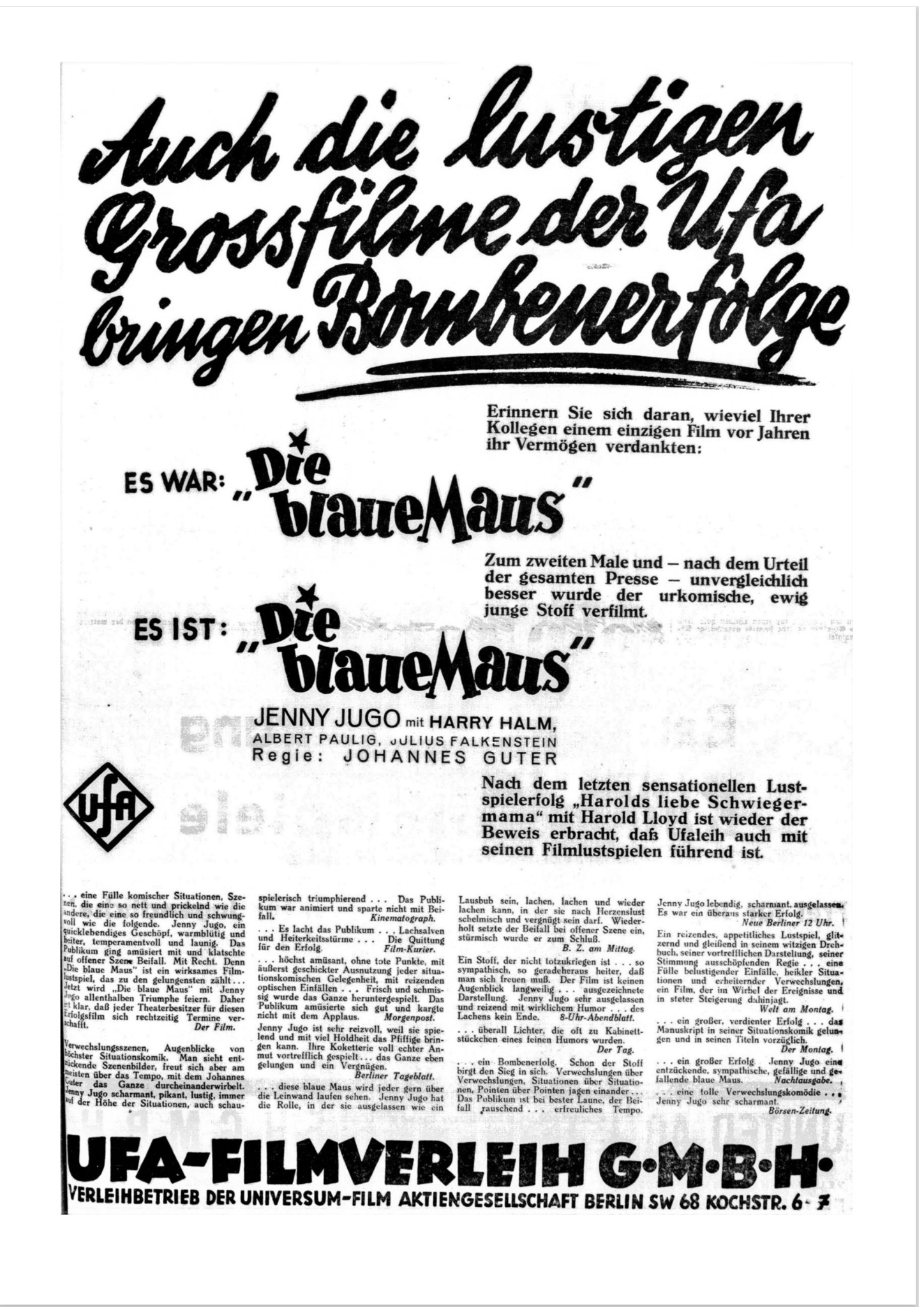
Contemporary reviewers also highlighted Jenny Jugo’s exuberance, the lively ensemble and the film’s inventive visual comedy. At the Berlin premiere, audiences responded enthusiastically, with repeated applause for Jugo. The Berliner Morgenpost of 18 November 1928 praised the comedy’s pace, direction, set design and cinematography while offering a more reserved assessment of Harry Halm’s performance.