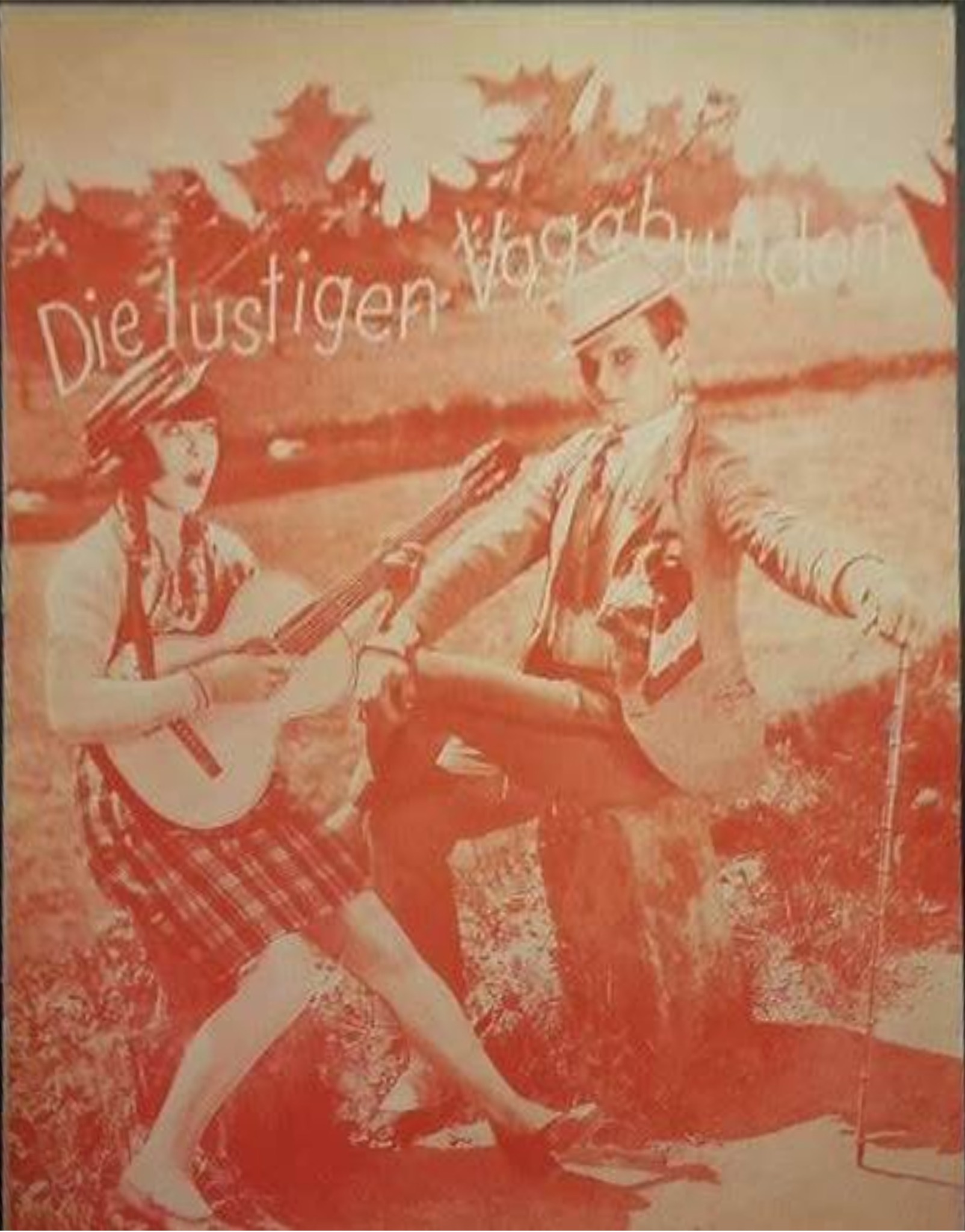
Die lustigen Vagabunden — The Merry Vagabonds is a German silent-film comedy.
A contemporary review appeared in the Darmstadt press on 19 May 1929, when the film was screening at the Union-Theater there:
— “The Merry Vagabonds”
This is a delightful German comedy film. Modeled after the American style, indeed, but still German, and much, much better, more entertaining, snappier, and more charming than American films of a similar ilk.
Ernst Verebes and Truus van Alten are a vagabonding artist couple—the program, however, lists them as a tramp and his road companion—with such delightful humor and enchanting drollery, combined with artistic agility, never-failing good humor, and mercurial nimbleness; an artist couple who, even in the garb and under the mask of tramps, do not deny their cultured humanity, so that in combination with Georg Alexander, who also plays a strongly comedic role here as Prince Adolar Gilka, this film turns into a truly good comedy.
Certainly a grotesque comedy, for much borders on the impossible. But it is nowhere the crass impossibility that the Americans prefer, and it is, above all, the captivating amiability of the acting, which particularly distinguishes the three named artists, that makes the course of the film so heart-refreshing that it is truly a loss not to have seen it.
In the large circle of performers, alongside those mentioned, a number of well-known artists also take part whose reputation has long been firmly established: Hermann Picha, Leo Peukert, Lotte Lorring, and various others. It is the merit of the direction (J. and L. Fleck) that the screenplay by Ida Jenbach and B. E. Lüthge has been condensed into a very snappy plot framed by an abundance of beautiful images.
Source: Darmstädter Tagblatt, 19 May 1929.
A Neue Mannheimer Zeitung advertisement of 29 January 1929 independently documents a screening at Lichtspielhaus Müller in Mannheim. It bills the film as a seven-act comedy and pairs it with Venus im Frack, an example of the multi-feature programmes of the late silent era.
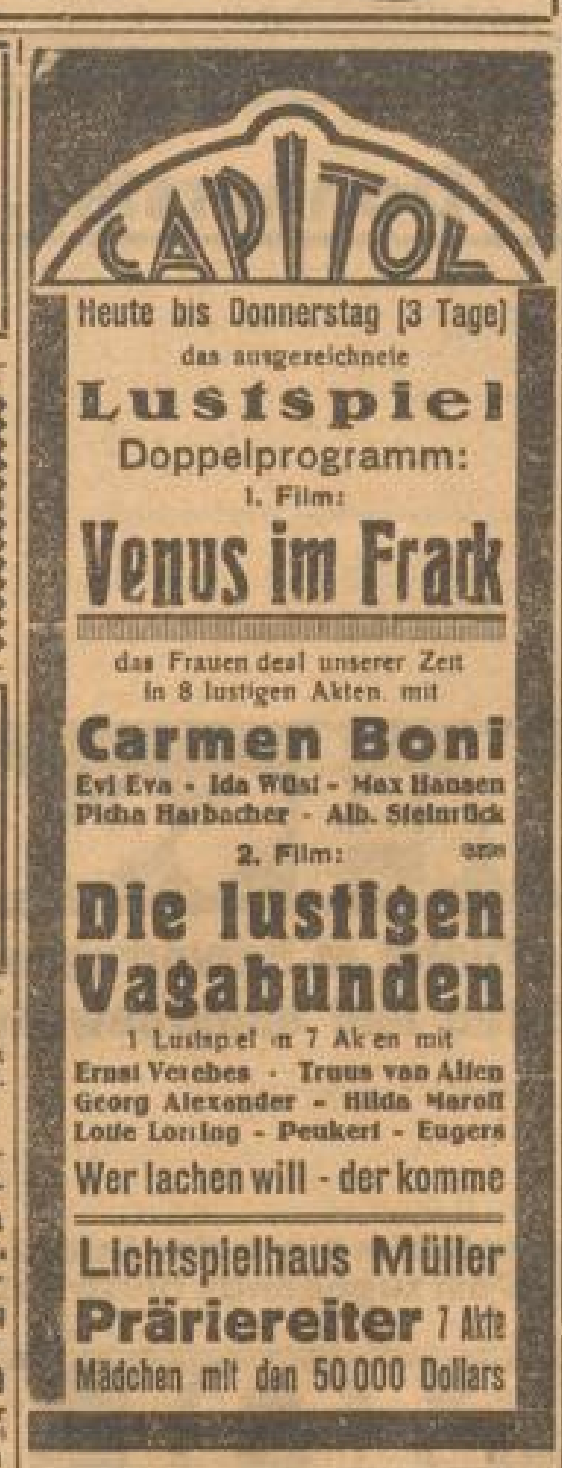
Neue Mannheimer Zeitung, 29 January 1929
Click image to enlarge...
Max Ehrlich’s contribution: Filmportal specifies he authored the Zwischentitel (intertitles), i.e. the written text panels inserted between scenes in silent films to convey dialogue, explain what is happening, or provide information needed to follow the story.
They were an essential part of silent-film storytelling, often appearing as white lettering against a black background. In comedies, intertitles could also provide jokes, witty remarks, and verbal punchlines that complemented the actors’ visual performances.
A Hegewald-Film publicity photograph of Truus van Aalten also survives on Ross Verlag postcard 3823/1.
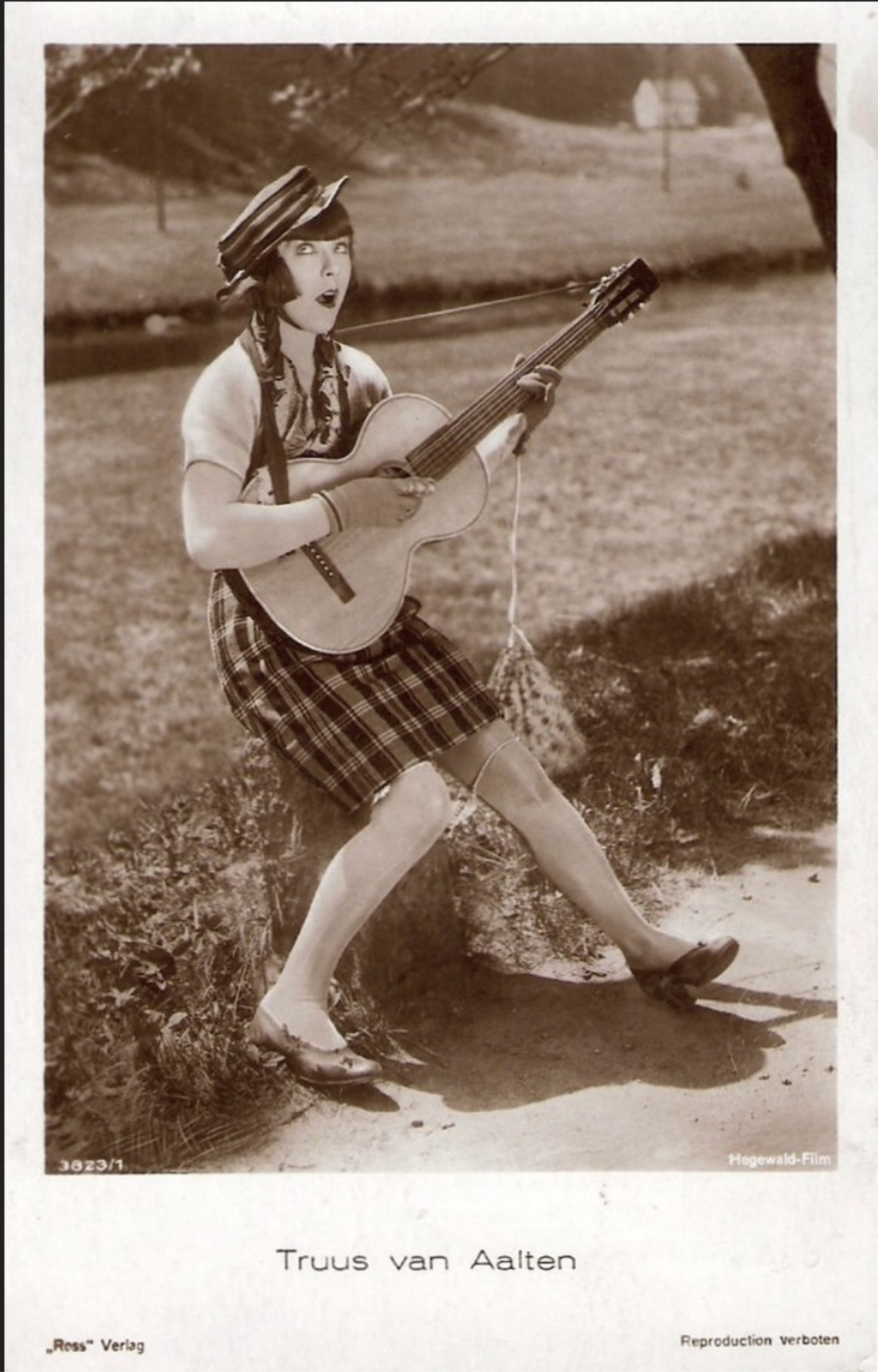
Truus van Aalten — Ross Verlag 3823/1
Click image to enlarge...
An illustrated 1928 newspaper advertisement provides additional period documentation.
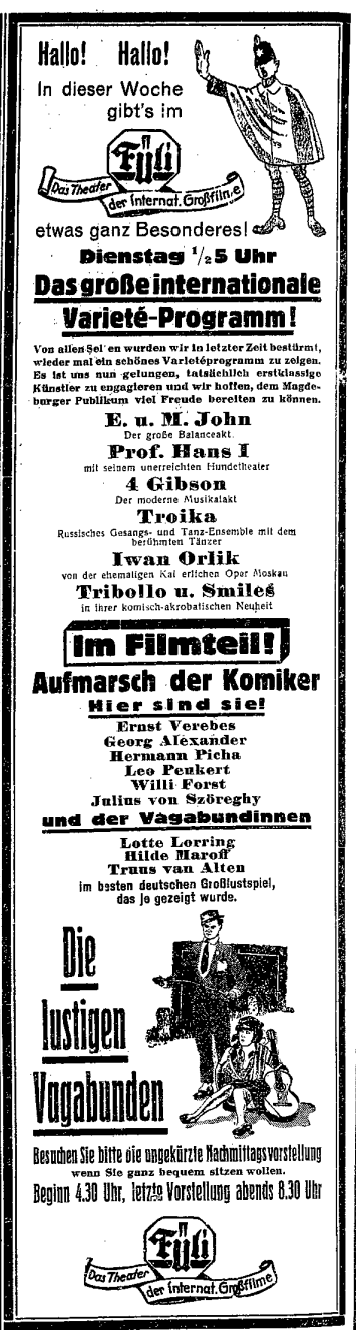
Source: Volksstimme, Magdebourg
18th September 1928
Click image to enlarge...
Identification: Several unrelated films also circulated under the title Die lustigen Vagabunden, including a Pat-and-Patachon film released in Germany in 1927 and a 1940 sound film starring Johannes Heesters.